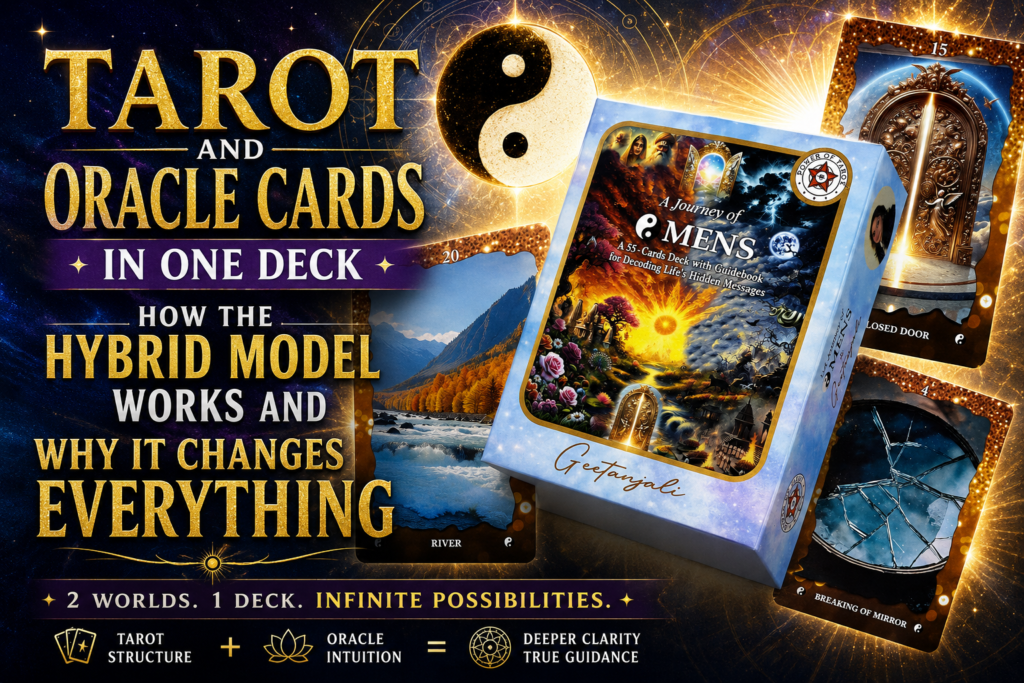
Tarot and Oracle Cards in One Deck – How the Hybrid Model Works and Why It Changes Everything
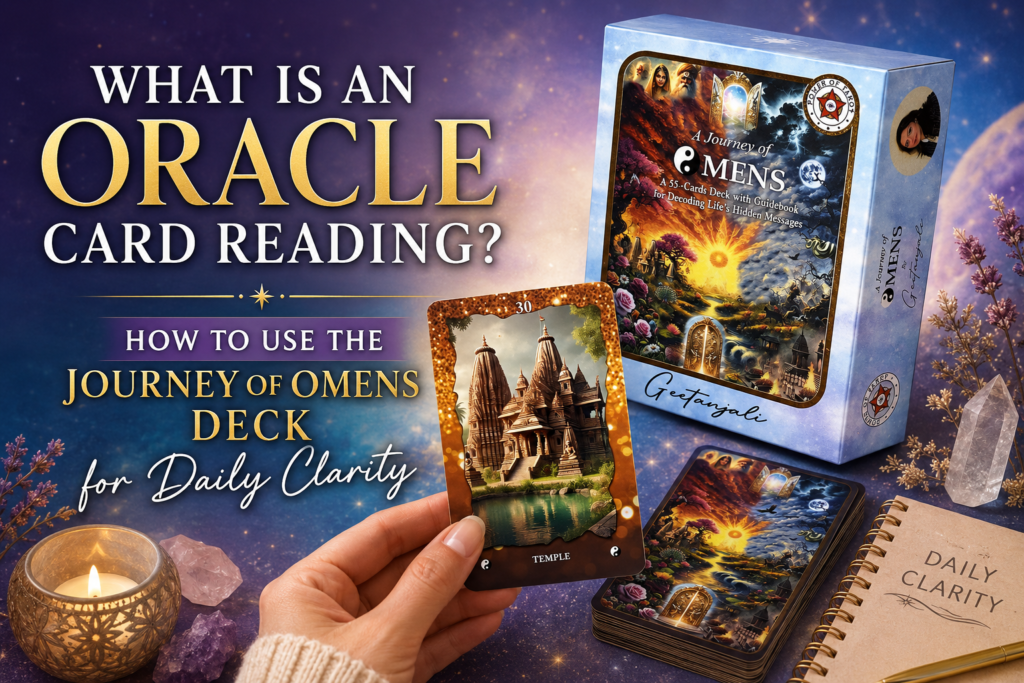
Every spiritual seeker who has explored cards faces the same crossroads eventually. Do you go with tarot — structured, deep, centuries of wisdom behind it, but steep to learn and rooted in Western symbolism that can feel distant from your lived experience? Or do you go with Oracle — intuitive, immediately accessible, free from rigid rules, but often vague and without a system you can grow into? For years, the answer was: pick one. Or buy both and figure out how to use them together yourself. That answer has changed. The tarot oracle hybrid model is not a marketing term. It is a genuinely different approach to card reading — one that combines the structured intelligence of tarot with the intuitive freedom of oracle into a single, unified system. When it is done well, it does not feel like a compromise between two things. It feels like the thing both were always trying to be. This article explains exactly what a tarot oracle hybrid deck is, how it works in practice, why it is particularly powerful for Indian spiritual seekers, and what makes the Journey of Omens by Geetveda the most complete expression of this model available today. What Is a Tarot Oracle Hybrid Deck? A true tarot oracle hybrid deck is one that can be used as a tarot deck, as an oracle deck, or as both simultaneously — without compromising what makes each system powerful. This is harder to achieve than it sounds. Most decks that call themselves hybrids are simply oracle decks with tarot-inspired imagery. The cards look like tarot but function like oracle — there is no real structural system, no ability to do pattern-based spread readings, no depth that develops over time. A genuine hybrid works differently. It carries an internal structure — like tarot — that allows for complex, layered readings where the relationships between cards produce meaning beyond any individual card. At the same time, each card is immediately readable on its own — like oracle — so a single daily pull delivers complete, actionable guidance without requiring knowledge of an elaborate system. The result is a deck that works at multiple levels simultaneously. Beginners use it like oracle and immediately find it meaningful. Experienced readers use it like tarot and discover extraordinary depth. And those who learn to use both systems together — the hybrid approach — find it produces readings more complete and accurate than either system alone. How Tarot Works — The Strength of Structure To understand why the hybrid model matters, it helps to understand what makes pure tarot powerful and where it falls short for many seekers. Tarot’s strength is its structure. The 78 cards follow a precise internal logic — Major Arcana tracking the major archetypal forces of human life, Minor Arcana covering the full texture of daily experience across four suits. When you lay cards in a spread, each position has a specific meaning, and the cards interact with each other to create a picture more complex and nuanced than any single card could offer. This structure is tarot’s superpower. It is also its barrier. Learning to read tarot fluently takes time. The Western symbolism of traditional decks — the Rider-Waite imagery, the European medieval archetypes — requires translation for many Indian readers. The steep learning curve means many beginners give up before the practice becomes truly useful. And traditional tarot, for all its depth, gives you a message but rarely tells you what to do about it. How Oracle Works — The Strength of Intuition Oracle cards work differently. With no fixed structure, each oracle deck is a unique creative and spiritual vision — and each card is designed to communicate directly, without the need for an elaborate system of interpretation. Oracle’s strength is accessibility and immediacy. You do not need to study for months before your first meaningful reading. You draw a card, the image speaks to you, the message resonates, and you have your guidance. For daily practice, emotional processing, and intuitive reflection, oracle is often the most natural and sustainable tool. Oracle’s limitation is depth. Without structure, it is difficult to do complex readings that map multiple dimensions of a situation. Without a system, the practice tends to plateau — beginners and experienced practitioners use oracle cards the same way, because there is no deeper layer to grow into. What the Hybrid Model Solves The hybrid model is not about splitting the difference between tarot and oracle. It is about taking what is genuinely best from both and designing a system where those strengths amplify rather than dilute each other. Structure with accessibility. A hybrid deck has enough structural coherence to support complex, layered readings — but the individual cards are designed to communicate immediately, without requiring memorisation of a traditional system. You can begin reading meaningfully on day one. The system reveals its deeper layers as your practice develops. Depth with direction. Traditional tarot gives you insight. Standard oracle gives you reflection. The hybrid model — when fully realised — gives you both, plus something neither offers alone: a specific, actionable next step emerging directly from the reading itself. Universal symbolism rooted in lived experience. The most effective hybrid decks are not built on foreign archetypes that require cultural translation. They are built on the universal language of signs, symbols, and signals that every human being experiences regardless of background — the recurring number, the vivid dream, the gut feeling, the meaningful coincidence. The Journey of Omens — The Hybrid Model Fully Realised The Journey of Omens — 55-Card Tarot Oracle Hybrid Deck by Geetveda is the most complete expression of the hybrid model currently available from an Indian spiritual brand — and one of the most genuinely original card decks in the market. Here is what makes it different from every other deck that claims the hybrid label. It Is Built on the Vedic Science of Signs and Omens The conceptual foundation of the Journey of Omens is not […]