
Chakra healing for beginners starts with one simple idea: your body holds energy, and when that energy feels stuck, so do you. If you have ever felt heavy for no clear reason, struggled to speak your truth, or felt disconnected from the people around you, the chakra system offers a way to look at those feelings.
This guide explains what chakras are, the meaning of each of the 7 chakras, the common signs of a blocked chakra, and gentle natural practices to help you feel balanced again.
A quick note first. Chakra work is a spiritual and traditional wellness practice, not a medical treatment. It can support relaxation and self-awareness, but it never replaces a doctor’s advice for physical or mental health concerns.
What Are Chakras?
The word chakra comes from Sanskrit and means “wheel” or “disc.” In Vedic and yogic traditions, chakras are energy centers that run along the spine, from its base to the crown of the head. Each one is linked with certain emotions, themes in life, and areas of the body.
When these centers are described as “open” or “balanced,” a person feels steady, clear, and connected. When one is described as “blocked” or “overactive,” the emotional or physical themes tied to it are said to feel off.
You do not need to believe anything in particular to try these practices. Many beginners simply use the chakra map as a framework for slowing down and checking in with themselves.
The 7 Chakras Meaning at a Glance
Understanding the 7 chakras meaning is the foundation of chakra healing for beginners. Here is each one, from the bottom up.
1. Root Chakra (Muladhara)
Located at the base of the spine. It relates to safety, stability, money, and feeling grounded. Its traditional colour is red.
2. Sacral Chakra (Svadhisthana)
Located below the navel. It relates to creativity, pleasure, emotions, and relationships. Its colour is orange.
3. Solar Plexus Chakra (Manipura)
Located in the upper abdomen. It relates to confidence, willpower, and self-worth. Its colour is yellow.
4. Heart Chakra (Anahata)
Located at the centre of the chest. It relates to love, compassion, forgiveness, and connection. Its colour is green.
5. Throat Chakra (Vishuddha)
Located at the throat. It relates to communication, honesty, and self-expression. Its colour is blue.
6. Third Eye Chakra (Ajna)
Located between the eyebrows. It relates to intuition, focus, and insight. Its colour is indigo.
7. Crown Chakra (Sahasrara)
Located at the top of the head. It relates to spiritual connection, purpose, and awareness. Its colour is violet or white.
Blocked Chakra Symptoms: How to Tell When Something Feels Off
Blocked chakra symptoms are described in traditional practice as a mix of emotional and physical signals. None of these are diagnoses. They are simply patterns people use as prompts for reflection.
- Root chakra: constant anxiety, financial worry, feeling unsafe or ungrounded
- Sacral chakra: creative blocks, emotional numbness, difficulty enjoying life
- Solar plexus chakra: low confidence, indecision, fear of taking charge
- Heart chakra: difficulty trusting, holding on to grudges, feeling lonely even around others
- Throat chakra: trouble speaking up, fear of being judged, or talking too much without being heard
- Third eye chakra: confusion, lack of direction, ignoring your gut feeling
- Crown chakra: feeling disconnected from purpose, cynicism, or a sense that nothing has meaning
If you notice several signs linked to one chakra, that is a gentle hint about where to focus your attention first. If any symptom is persistent, severe, or affecting your daily life, please speak with a qualified health professional.
Chakra Balancing Techniques You Can Start Today
You do not need special training to begin. These chakra balancing techniques are simple, free, and beginner-friendly.
1. Mindful Breathing and Meditation
Sit comfortably and bring your attention to one chakra at a time, starting at the root. Breathe slowly, imagine its colour glowing softly, and stay for a few minutes before moving upward. Research on meditation generally supports its benefits for stress and relaxation, which is one reason this practice feels so calming. You can read an overview from the National Center for Complementary and Integrative Health.
2. Mantra and Sound
Each chakra has a traditional seed sound (bija mantra): LAM, VAM, RAM, YAM, HAM, OM, and a silent OM for the crown. Chanting them softly can help you focus the mind.
3. Yoga and Gentle Movement
Grounding poses such as Mountain or Child’s Pose suit the root chakra. Heart-opening poses such as Camel or Cobra suit the heart. Even ten minutes of stretching can shift how you feel.
4. Colour, Crystals, and Nature
Wearing or surrounding yourself with a chakra’s colour is a simple way to bring your focus to it. Spending time barefoot on grass is a classic grounding practice for the root chakra.
5. Self-Reflection and Journaling
Ask yourself one question per chakra, such as “Do I feel safe?” for the root or “Am I speaking honestly?” for the throat. Writing your answers often reveals which area needs attention.
6. Tarot and Oracle Reflection
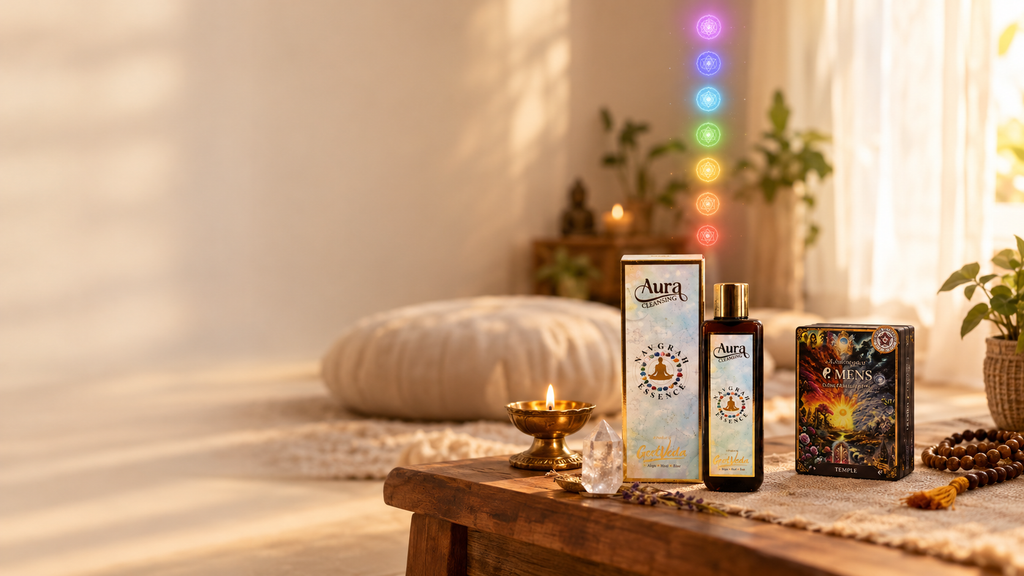
Many people use card readings as a mirror for their inner world. A single daily card can prompt a useful question about your feelings. If you are new to this, the GeetVeda A Journey of Omens 55-card tarot oracle deck is designed for beginners and comes with a Hindi and English guidebook.
7. Clearing Your Space and Energy
Many traditions teach that your surroundings affect how you feel, so cleansing your space is a common part of chakra healing for beginners. Smoke cleansing, sound bowls, and herbal sprays are popular options. If you would like a ready-made option, the GeetVeda Navgrah Aura Cleanser Spray is an Ayurvedic herbal spray made for aura cleansing and chakra healing rituals. Spray it around yourself, your meditation corner, or your workspace before you begin a practice, and take a few calm breaths as the mist settles.
It is a supportive ritual tool, not a cure. Many people simply find that a fresh scent and a deliberate pause help them feel calmer and more present.
A Simple 10-Minute Chakra Routine for Beginners
- Cleanse your space with a few sprays of Aura Cleanser or by opening a window.
- Sit comfortably and take five slow breaths.
- Move your attention from root to crown, spending about one minute on each chakra.
- Silently repeat each seed sound, or simply picture each colour.
- Finish with a minute of stillness and write down how you feel.
Do this daily for two weeks and notice any changes in your mood, sleep, or focus.
Mistakes Beginners Should Avoid
- Trying to fix all seven chakras at once. Start with the one that matches your biggest concern.
- Expecting overnight results. Balance is a gentle, ongoing practice.
- Ignoring practical needs. Sleep, food, movement, and professional care matter as much as any ritual.
- Treating chakra work as a replacement for medical care. It works best alongside it.
When to Seek Personal Guidance
Sometimes a general guide is not enough, and you want advice made for you. Your birth chart can offer another lens on your strengths and challenges. You can explore astrology consultancy with Geetanjali Sharma, learn more about the Vastu consultancy service for the energy of your home, or book a tarot consultancy session for personal clarity. You can also learn more about GeetVeda and its approach to spiritual wellness, or browse our full collection of spiritual products.
Frequently Asked Questions
How long does chakra healing take?
There is no fixed timeline. Many beginners notice feeling calmer within a couple of weeks of daily practice, but results vary from person to person.
Can I work on more than one chakra at a time?
Yes, but beginners often do better focusing on one or two. The 10-minute routine above lets you touch on all seven gently.
Is chakra healing scientifically proven?
Chakras are a spiritual concept, and there is no scientific evidence that they exist as physical structures. However, the practices used to balance them, such as meditation, breathing, and journaling, are known to support relaxation and stress relief.
What is the best chakra to start with?
Most teachers recommend beginning with the root chakra, because it forms the base of the system and supports a feeling of stability.
Final Thoughts
Chakra healing for beginners does not need to be complicated. Learn the 7 chakras meaning, notice which blocked chakra symptoms feel familiar, and choose a few chakra balancing techniques that fit your day. Small, regular practices such as breathing, journaling, and cleansing your space build up into a calmer, clearer you.
Start tonight with ten quiet minutes, and let your practice grow at its own pace.
Disclaimer: This article is for general informational and spiritual wellness purposes only and is not medical advice. Please consult a qualified professional for any health concern.